The Hunger Games Series
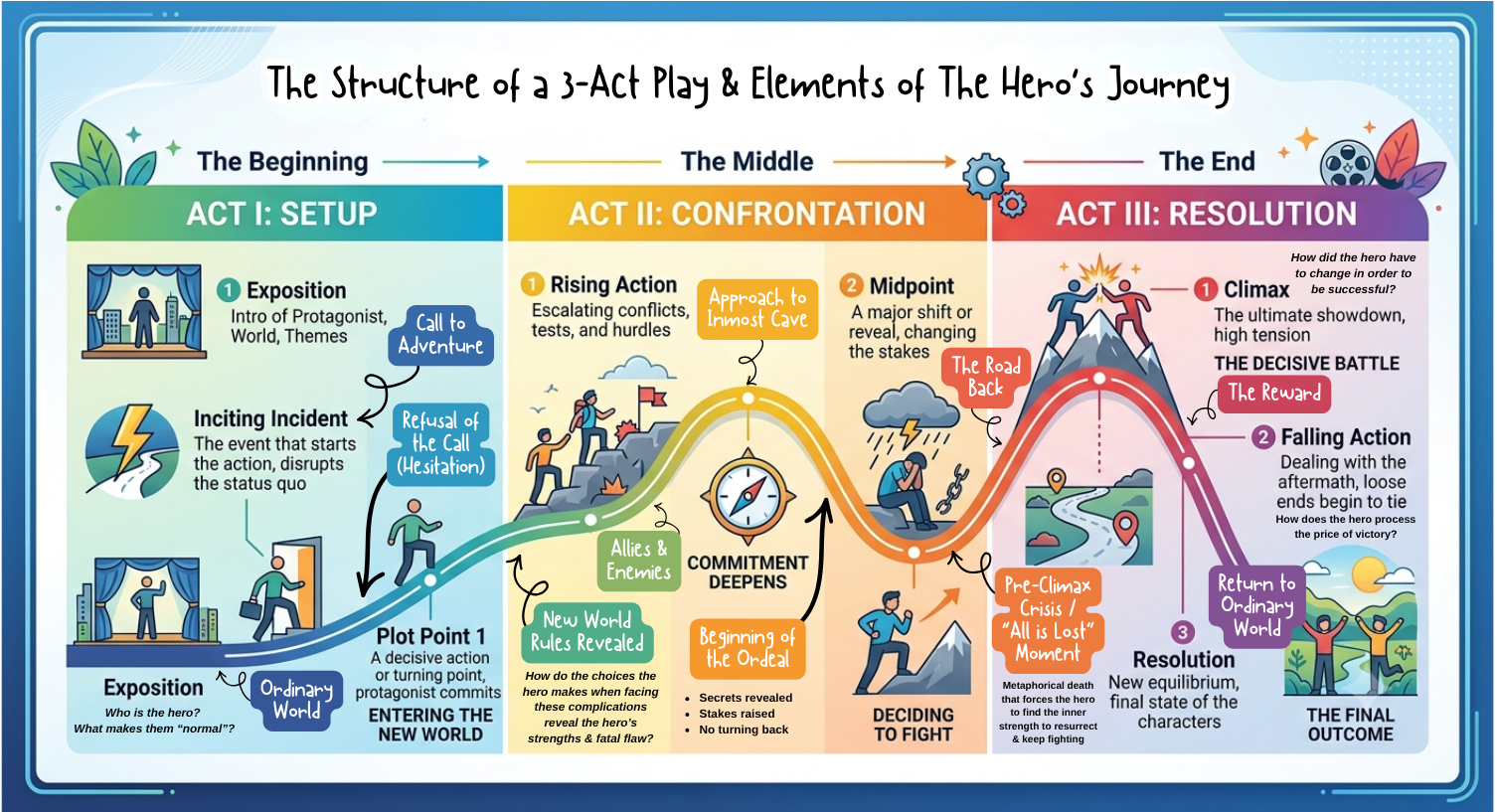
The architecture of The Hunger Games trilogy directly reflects classic theatrical design. Each of the three novels is split into three equal parts of nine chapters, resulting in 27 chapters per book and a grand total of 81 chapters across the entire series.
Analyzing the 3-Act Structure and The Hero’s Journey
Act 1 (Chapters 1 - 9)
How is the protagonist’s normal life, environment, and internal flaw/discontentment established at the very beginning?
What specific event disrupts the protagonist's daily life and presents them with a clear problem, challenge, or quest?
Does the protagonist initially hesitate, make excuses, or resist taking action due to fear, insecurity, or obligation?
Who or what gives the protagonist the advice, training, or magical tool they need to build up the courage to face the journey?
What definitive choice or action does the protagonist take to leave their old life behind and officially commit to entering the "New World" of the story?
Act 2 (Chapters 10 - 18)
What initial obstacles do they face in this new environment, and who joins or opposes them along the way?
As the midway point approaches, how do the stakes escalate, and how does the protagonist prepare to face the heart of the conflict?
What major revelation, shift, or twist occurs exactly halfway through the story that changes the rules of the game and deepens the protagonist's commitment?
What is the central, high-stakes confrontation in the middle of the story where the protagonist faces their greatest fear or a massive physical/emotional threat?
Following the ordeal, what crushing setback or symbolic "death" occurs that makes victory seem completely impossible?
Act 3 (Chapters 19 - 27)
How does the protagonist find the inner strength to rally, rise from their low point, and commit to one final, decisive battle?
What is the absolute peak of tension where the protagonist uses everything they have learned to face the primary antagonist or core conflict one last time?
As the smoke clears, what immediate internal or external reward (the "elixir") does the protagonist secure as a result of their victory?
How is the new equilibrium established? How does the protagonist return to a state of normalcy, and how does their transformation permanently alter their world?
The Hunger Games
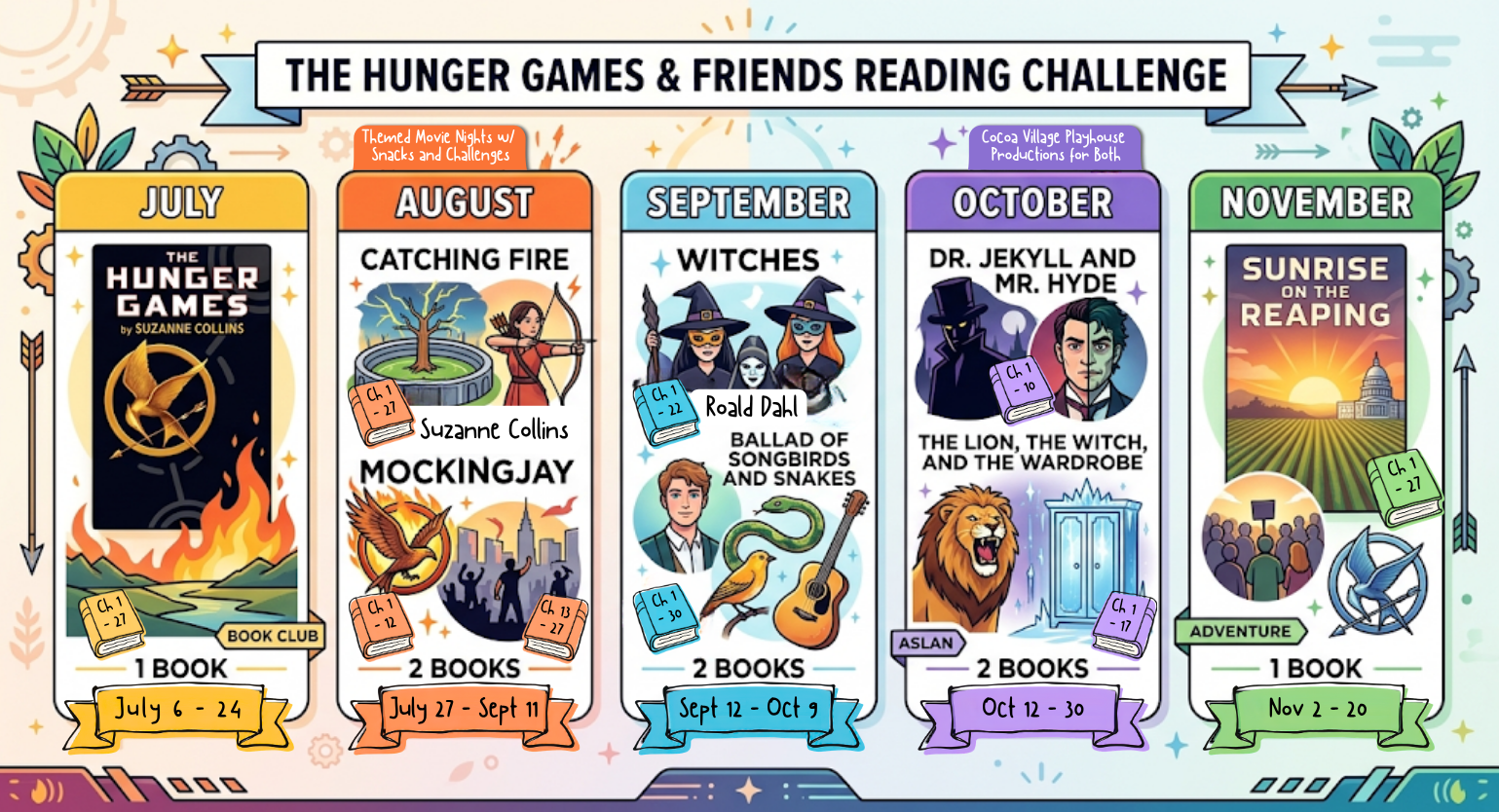
Novel: July 6 - 24
Ch 1 - 9 by July 10
Ch 10 - 18 by July 17
Ch 19 - 27 by July 24
Movie (2012) - July 24
Streaming on Netflix
Dinner
Muddled nightshade berry (blueberries) spritzer
District 12 Flatbread: Peeta bread with an olive oil and herb base topped with Prim’s goatcheese, roasted cherry tomatoes, and balsamic glaze
District 11 slides apples and strawberries
Capital Cherry Cheesecake
Book 2 - Catching Fire
Novel: July 27 - Aug 14
Ch 1 - 9 by July 31
Ch 10 - 18 by Aug 7
Ch 19 - 27 by Aug 14
Movie (2013)
Dinner
Book 3 - Mockingjay
Novel: Aug 17 - Aug 28
Ch 1 - 6 by Aug 21
Ch 7 - 12 by Aug 28
Movie, Part 1 (2014)
Dinner
Novel: Aug 29 - Sept 11
Ch 13 - 20 by Sept 4
Ch 21 - 27 by Sept 11
Movie, Part 2 (2015)
Dinner
Book 4 - Ballad of Songbirds and Snakes
Novel: Sept 21 - Oct 2
Ch 1 - 15 by Sept 25
Ch 16 - 30 by Oct 2
Movie (2023)
Dinner
Book 5 - Sunrise on the Reaping
Novel: Nov 2 - 20
Ch 1 - 9 by Nov 6
Ch 10 - 18 by Nov 13
Ch 19 - 27 by Nov 20
Movie (2026)
Dinner
Culminating Activity
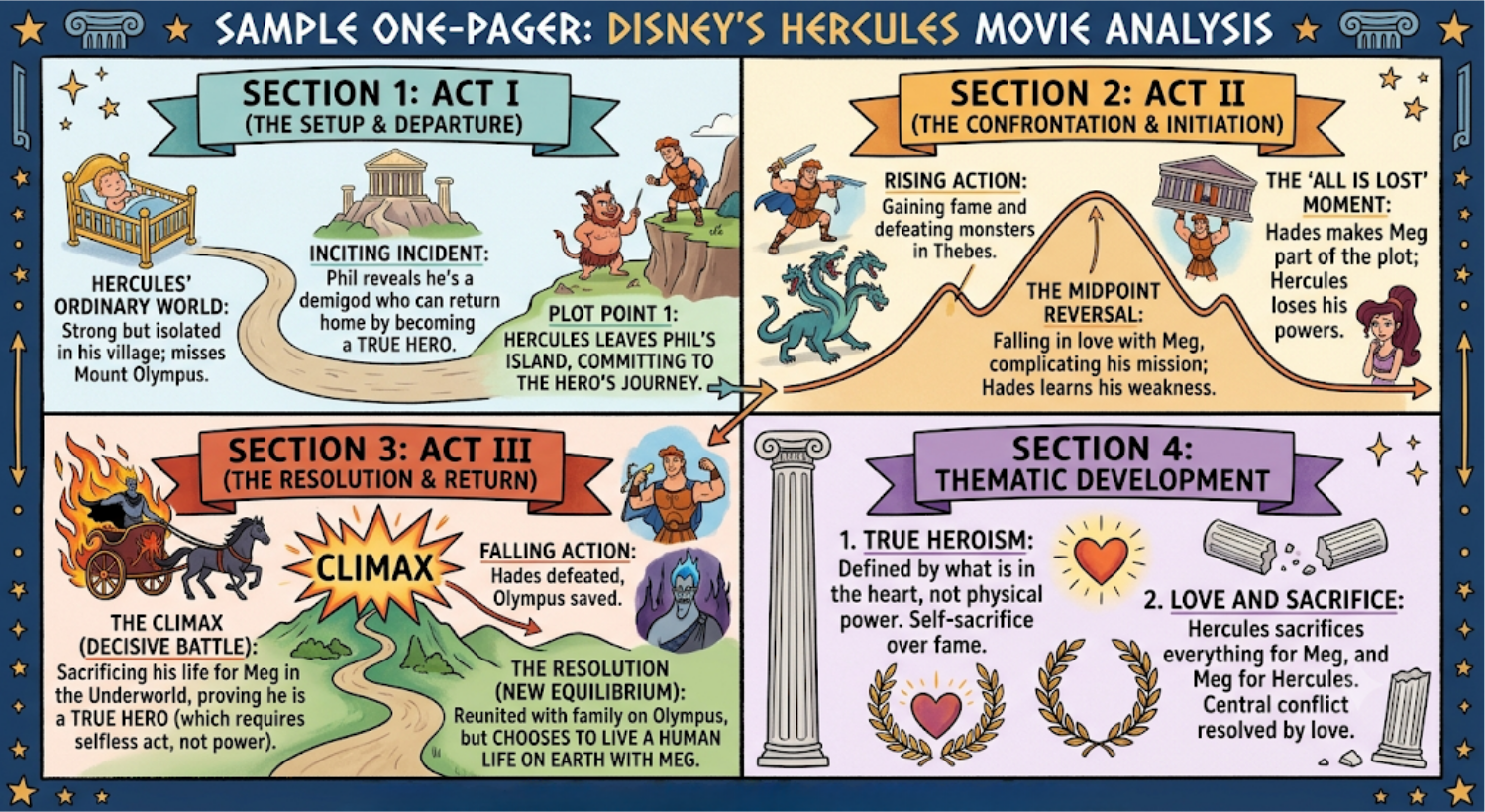
A one-pager is a single-page response that blends critical thinking, text analysis, and visual creativity. It allows you to showcase your deep understanding of a novel’s structure and meaning on a single, scannable canvas.
The One-Pager template is divided into four distinct quadrants. Each section requires a mix of thoughtful written analysis and intentional visual elements:
Section 1: Act I
Focus on how the story begins. You must identify the protagonist's "Ordinary World," the specific Inciting Incident that disrupts their life, and the moment they cross the threshold into the main conflict.
Section 2: Act II
Map out the rising action and the messy middle of the story. Detail the escalating obstacles, the major Midpoint Reversal or twist, and the devastating "All is Lost" moment where victory seems completely out of reach.
Section 3: Act III
Analyze the final push of the novel. Document the Climax (the ultimate showdown), the falling action, and how a new equilibrium or sense of normalcy is finally established.
Section 4: Thematic Development
Move beyond the plot to look at the deeper meaning. Track how the book's core themes evolve from the beginning to the end. What is the author trying to teach the audience through the characters' experiences?