
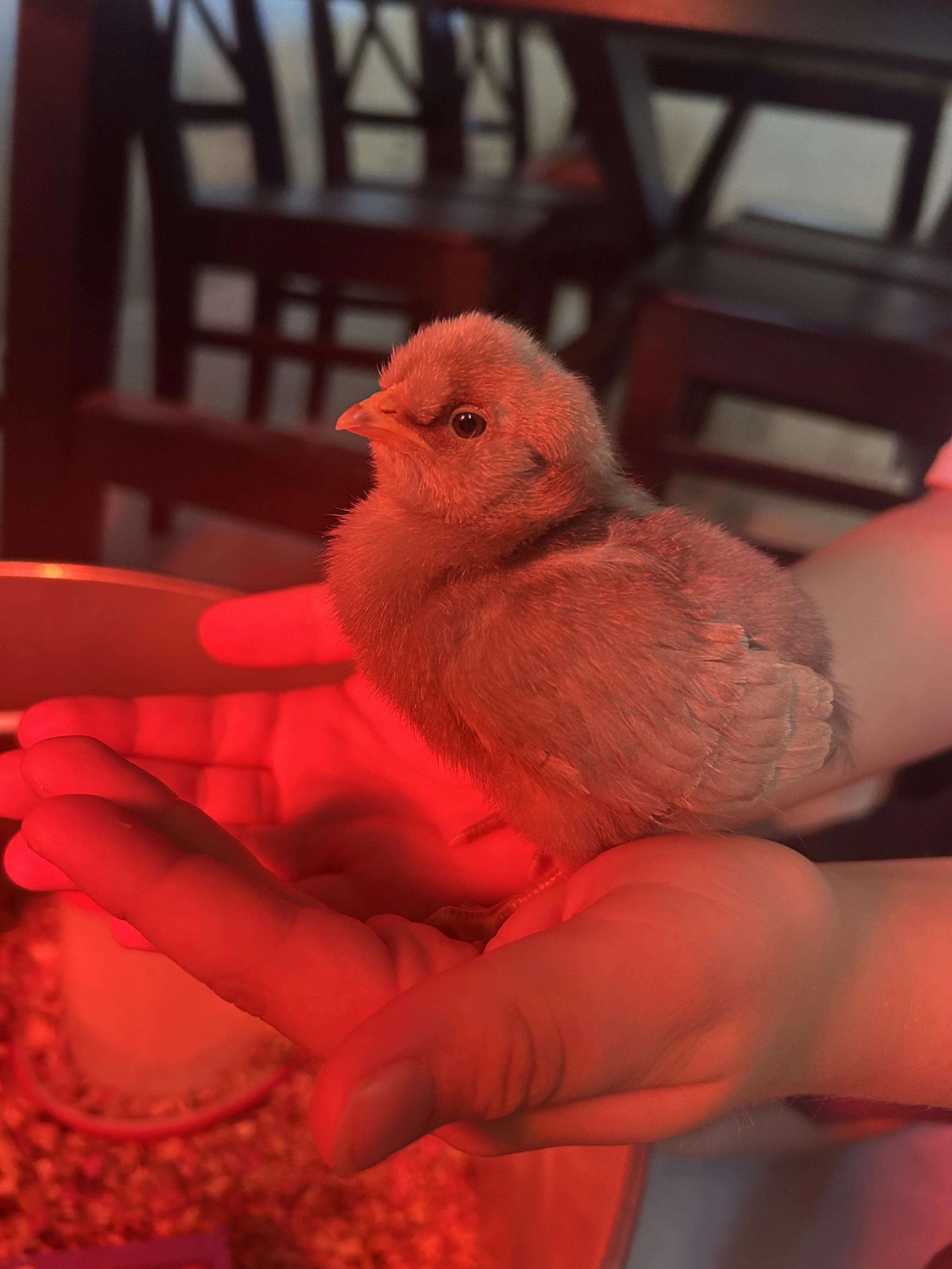
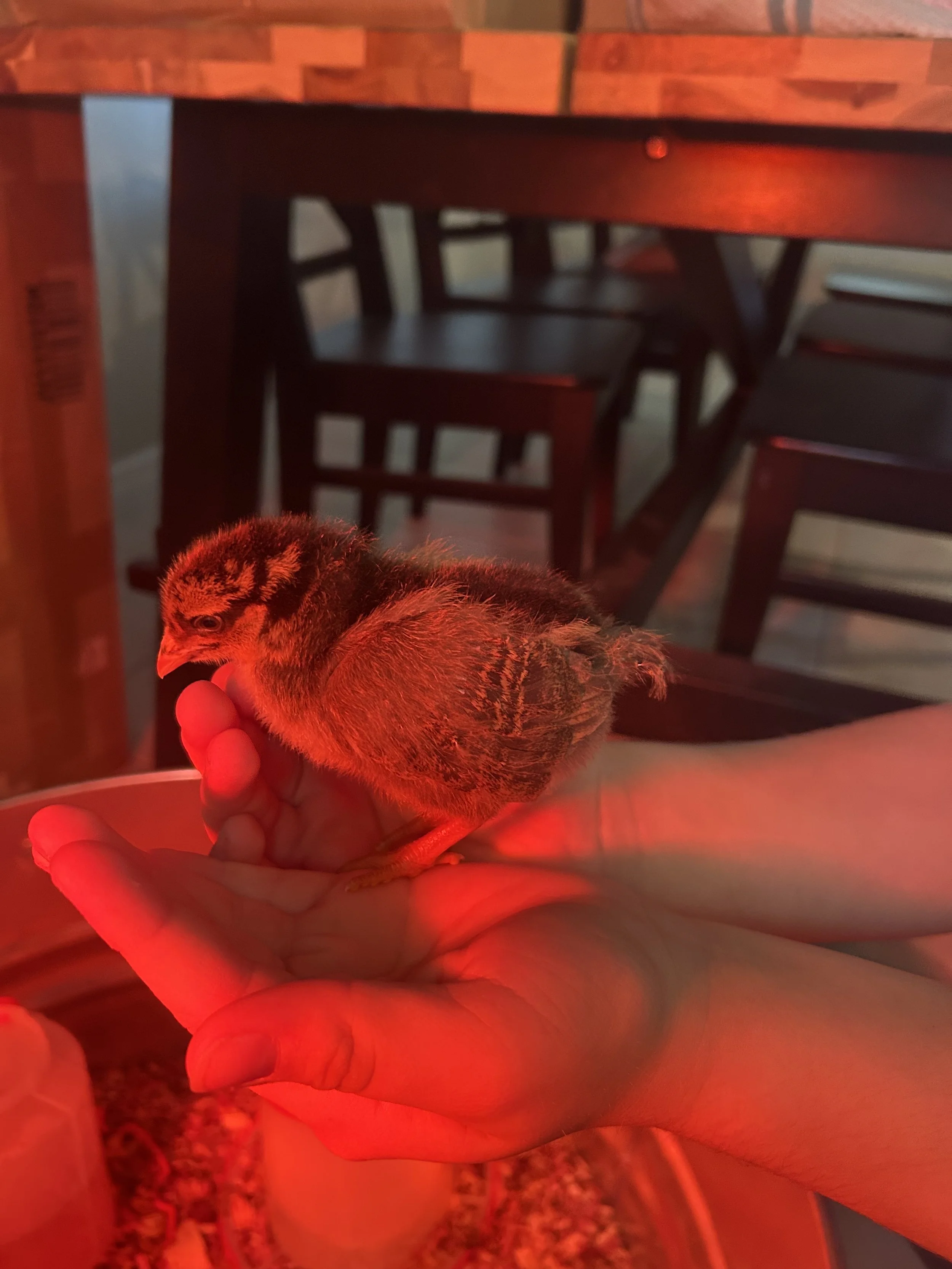
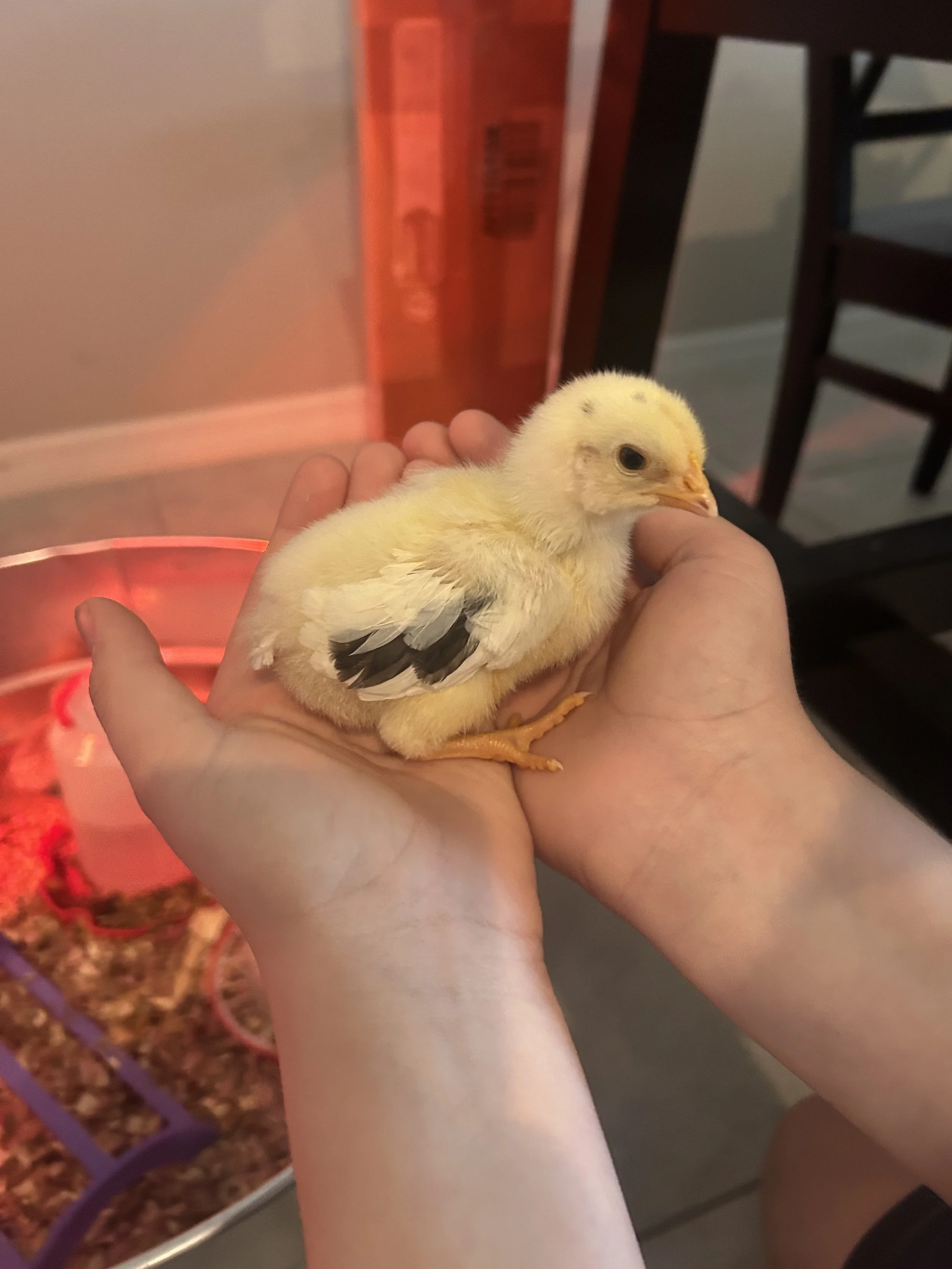
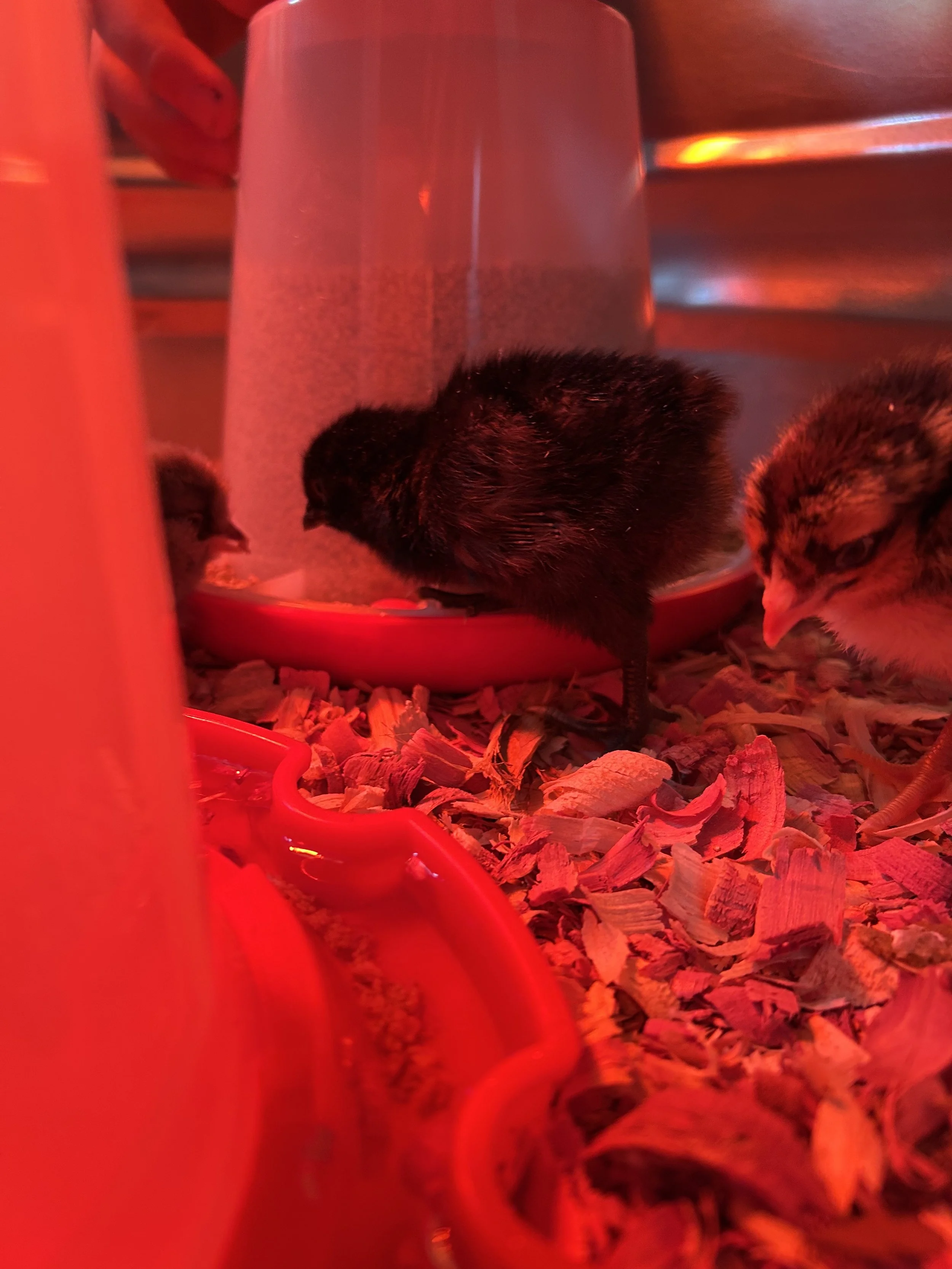
Baby chicks
Saphire Olive Egger
California White
Easter Egger
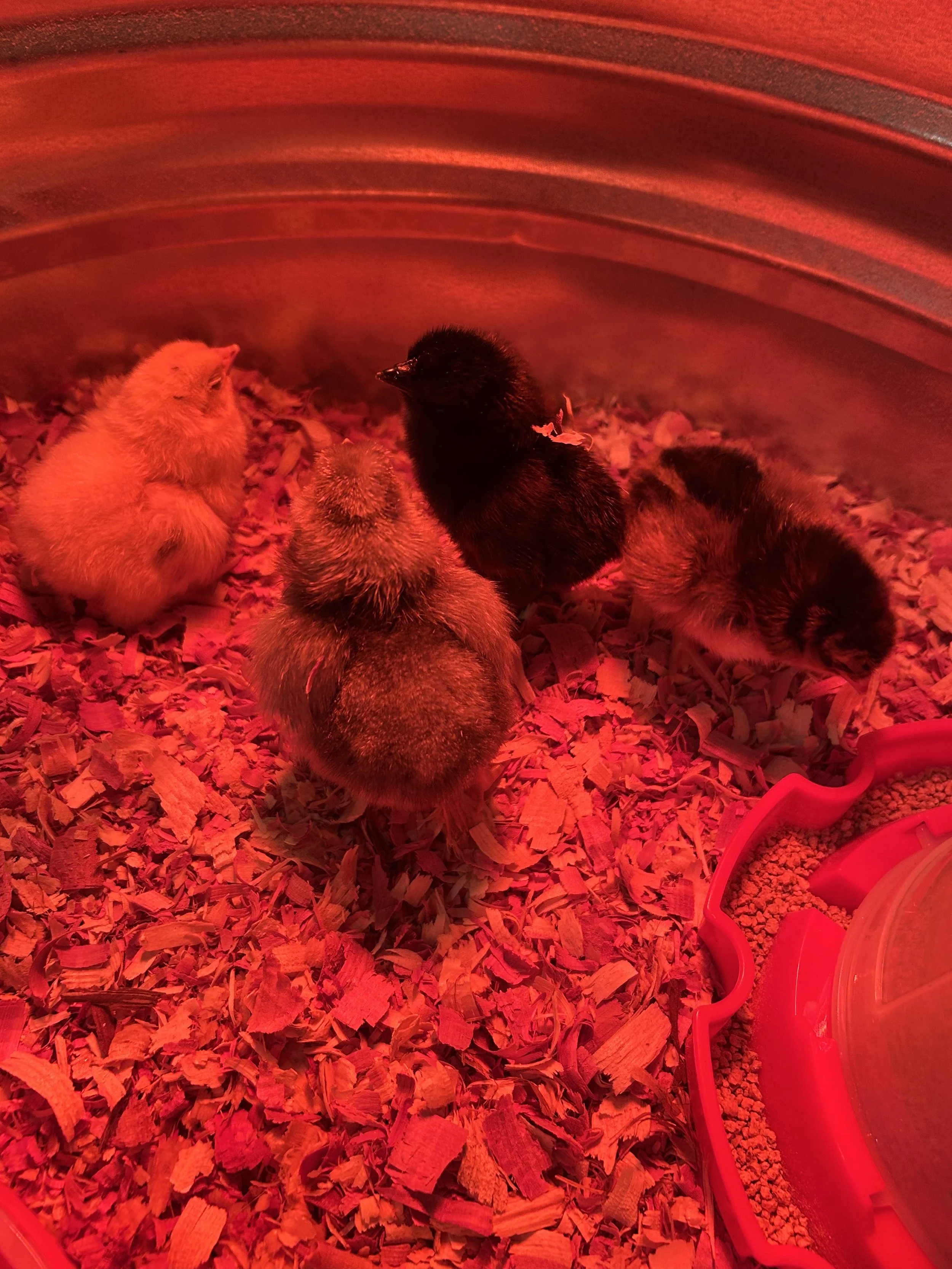
The Brooder Box
We went to Tractor Supply to get everything we needed to get started with the chicks.
Heat lamp
Wooden box or galvinized tub
Cedar shavings
Chicken feeder
Baby chick crumbs
Chicken waterer
Care
We were told when we got home with the chicks to make sure they know where the water is located. We did this by picking each up one at a time and dipping their beaks in the waterer.
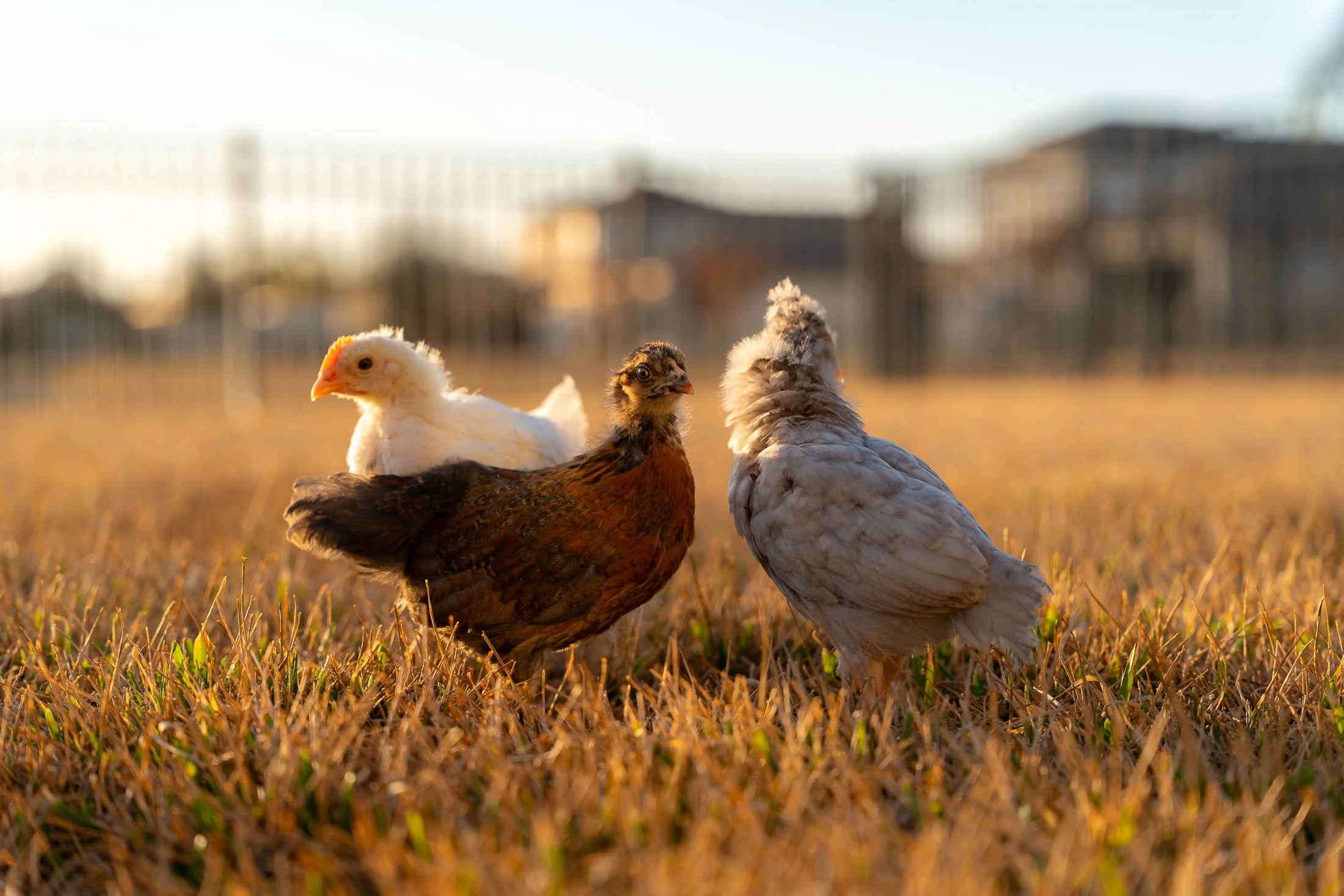
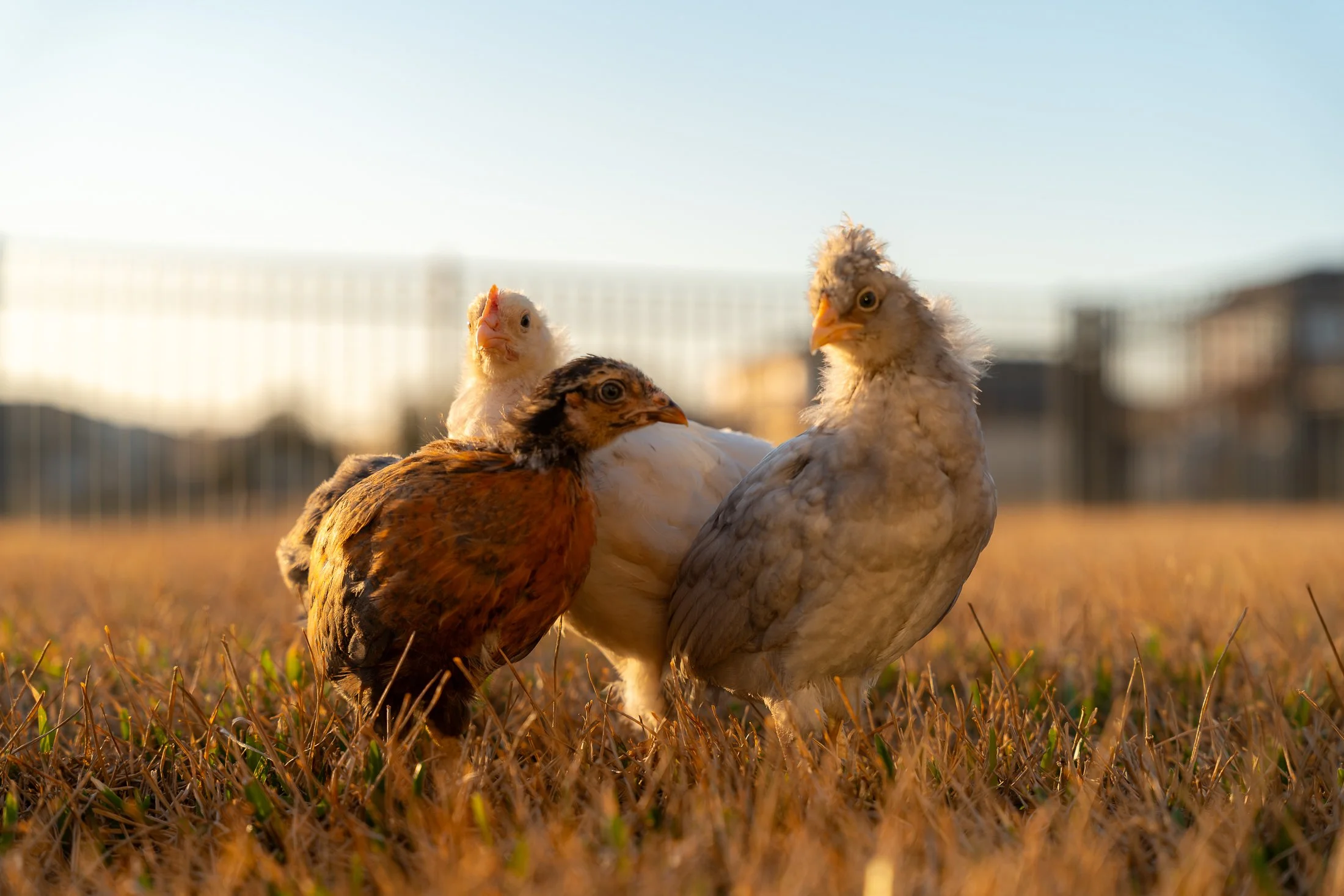
Then, we named them: Pearl, Kevin, Derrick and Hei Hei.
The birds grew very quickly. We found out that Pearl (the black copper maran) was super vocal. Unforunately, we learned too late this was a distress call. The second morning we woke up, Pearl had passed. It was obvious the chick’s size was much smaller than the other two. We believe Pearl was either bullied by the other chicks away from the feeder (behavior we later observed between the remaining chicks) or there was some kind of anatomical explanation. We read that sometimes chickens are born with smaller hearts that cannot keep up with their growth.
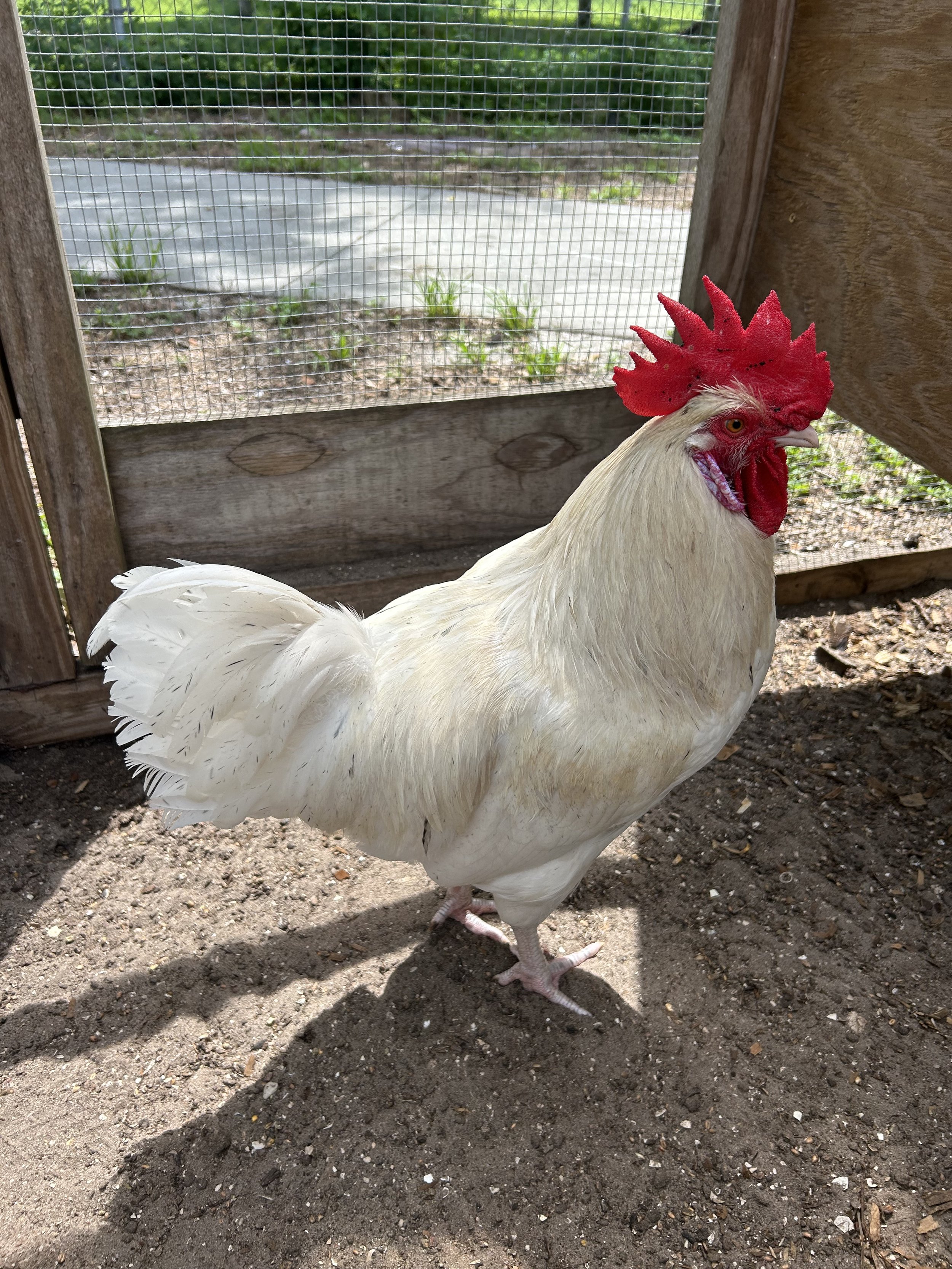
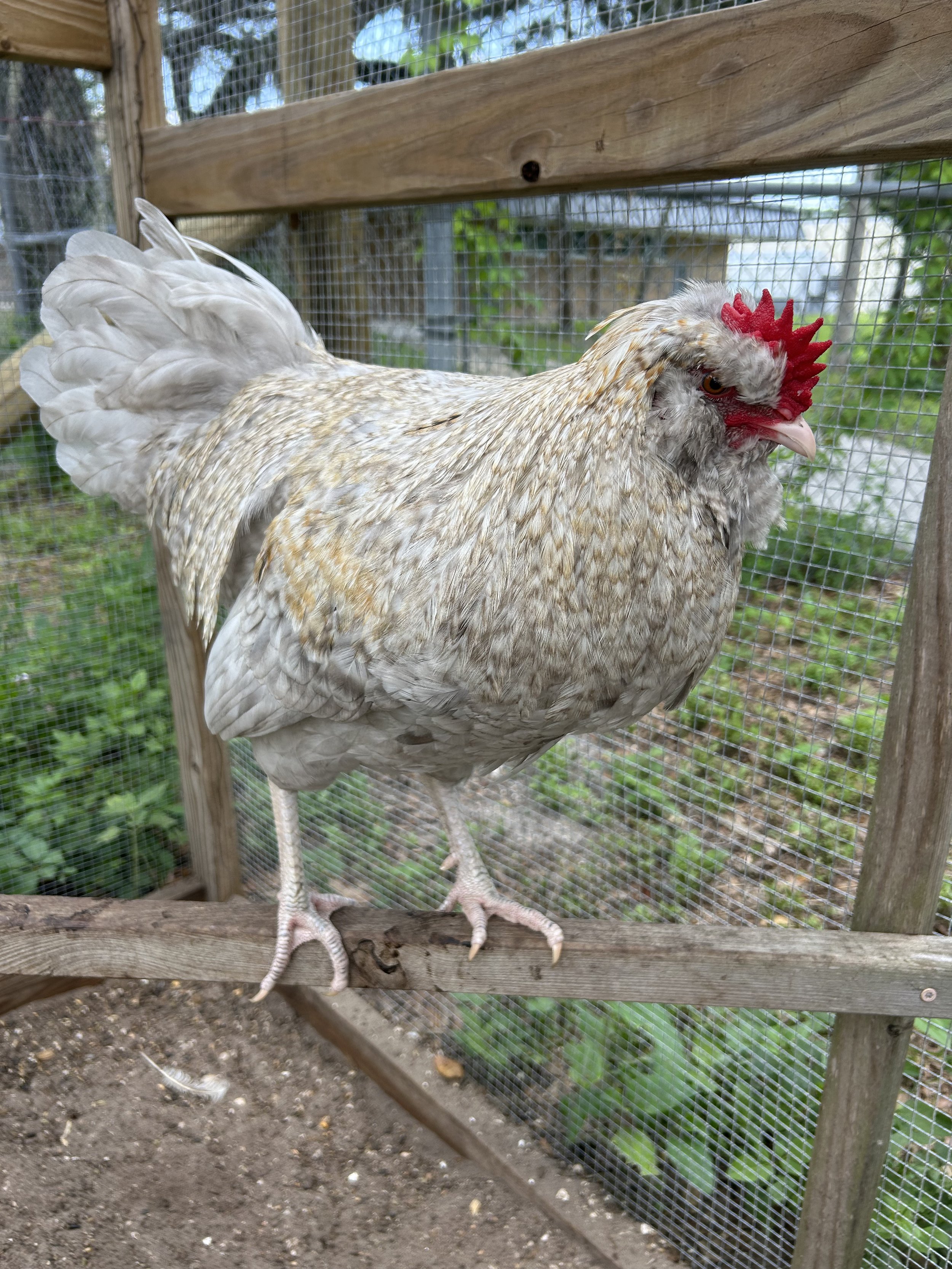
We learned the sound of their distress call too late, but now we respond immediately when we hear it. Now, it typically means Hei Hei is being too assertive. We believe Hei Hei is a rooster.
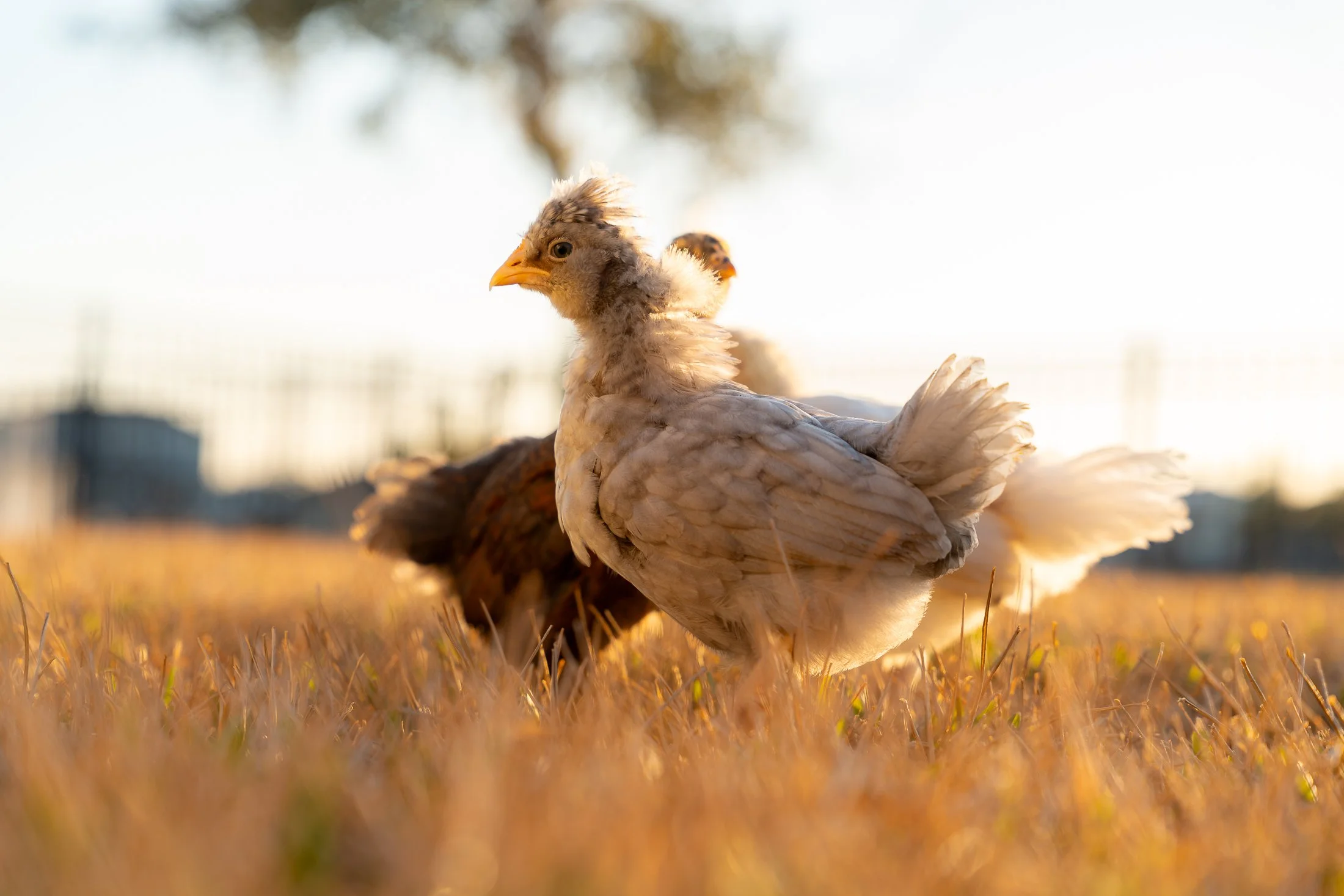
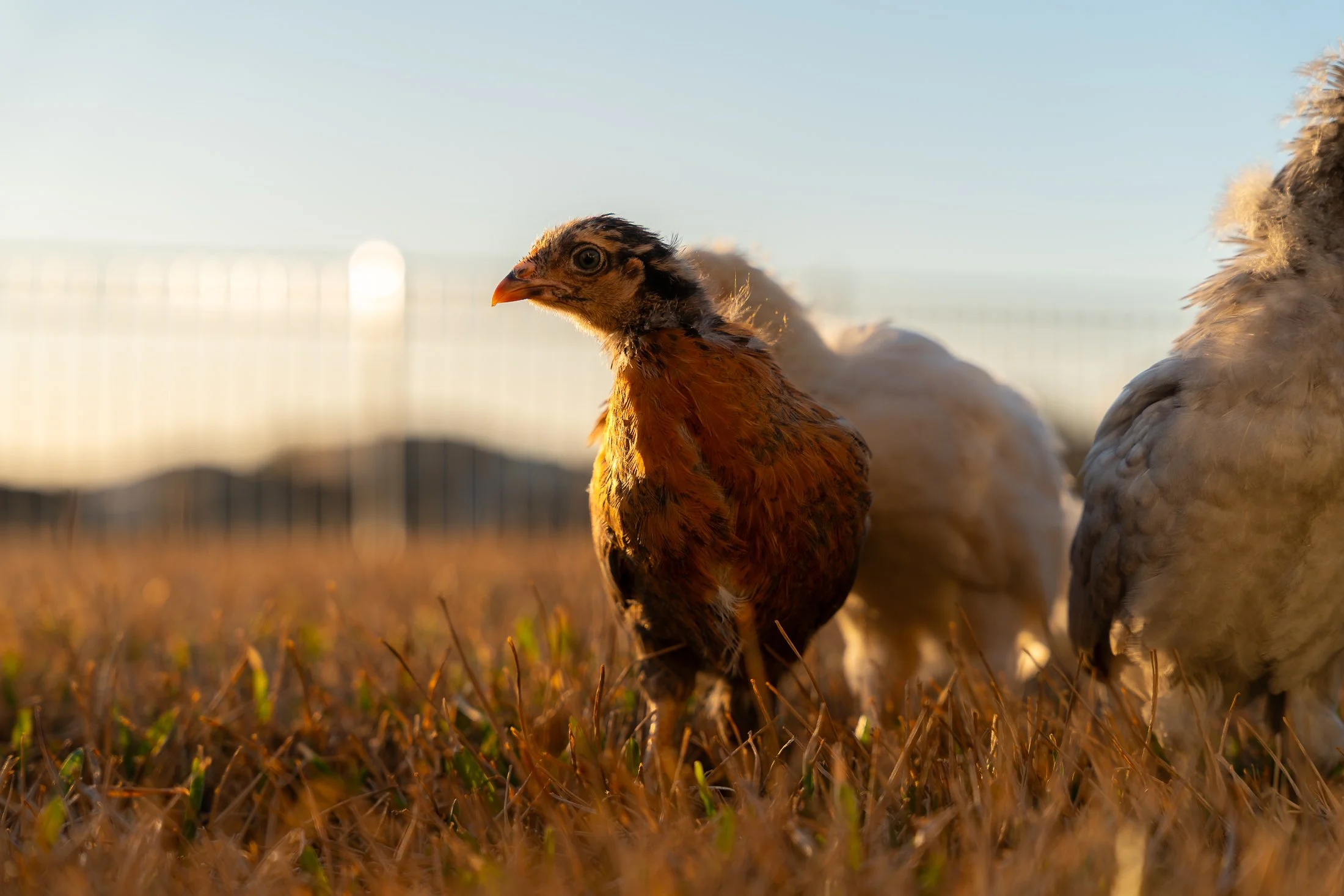
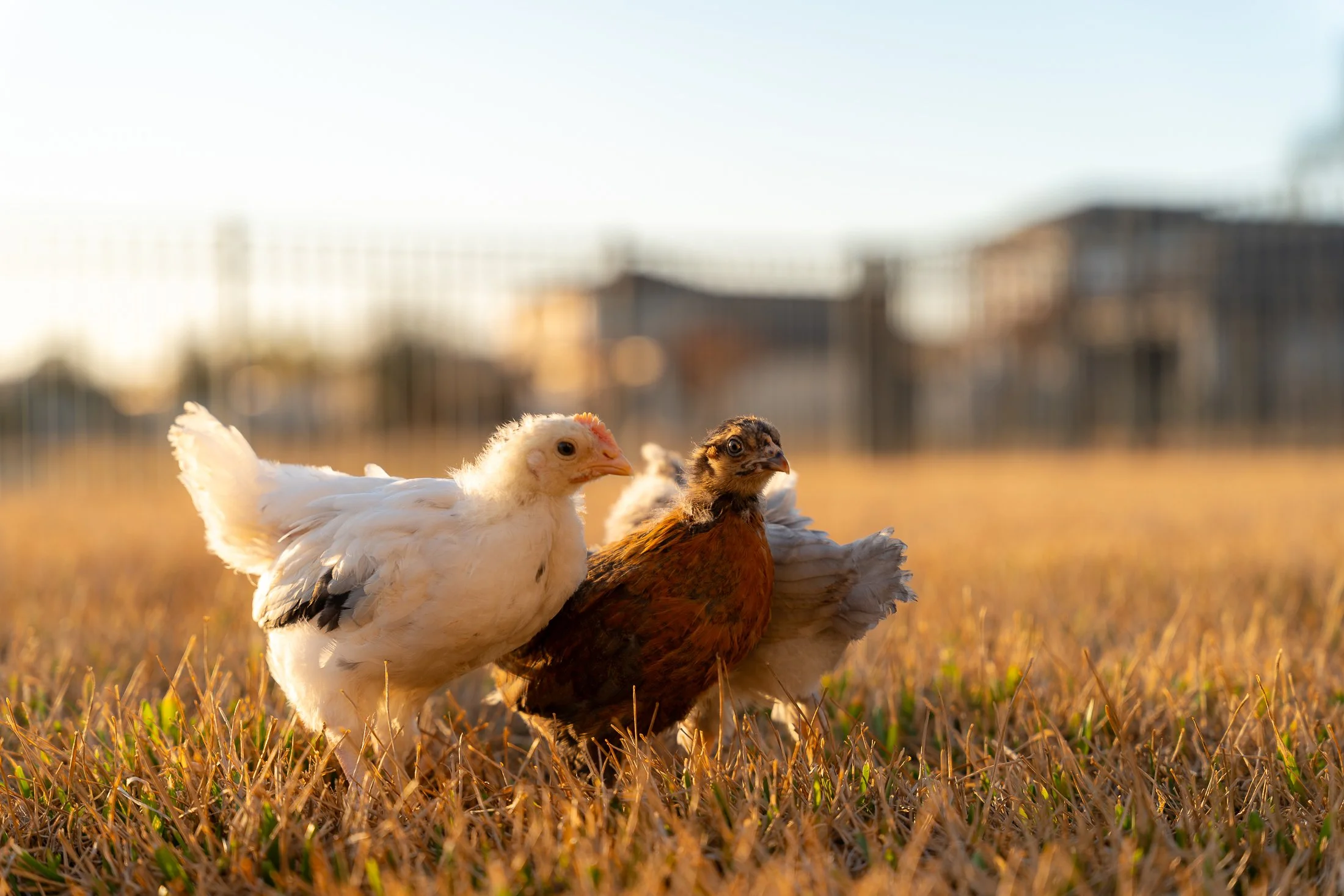
Hen or Rooster?
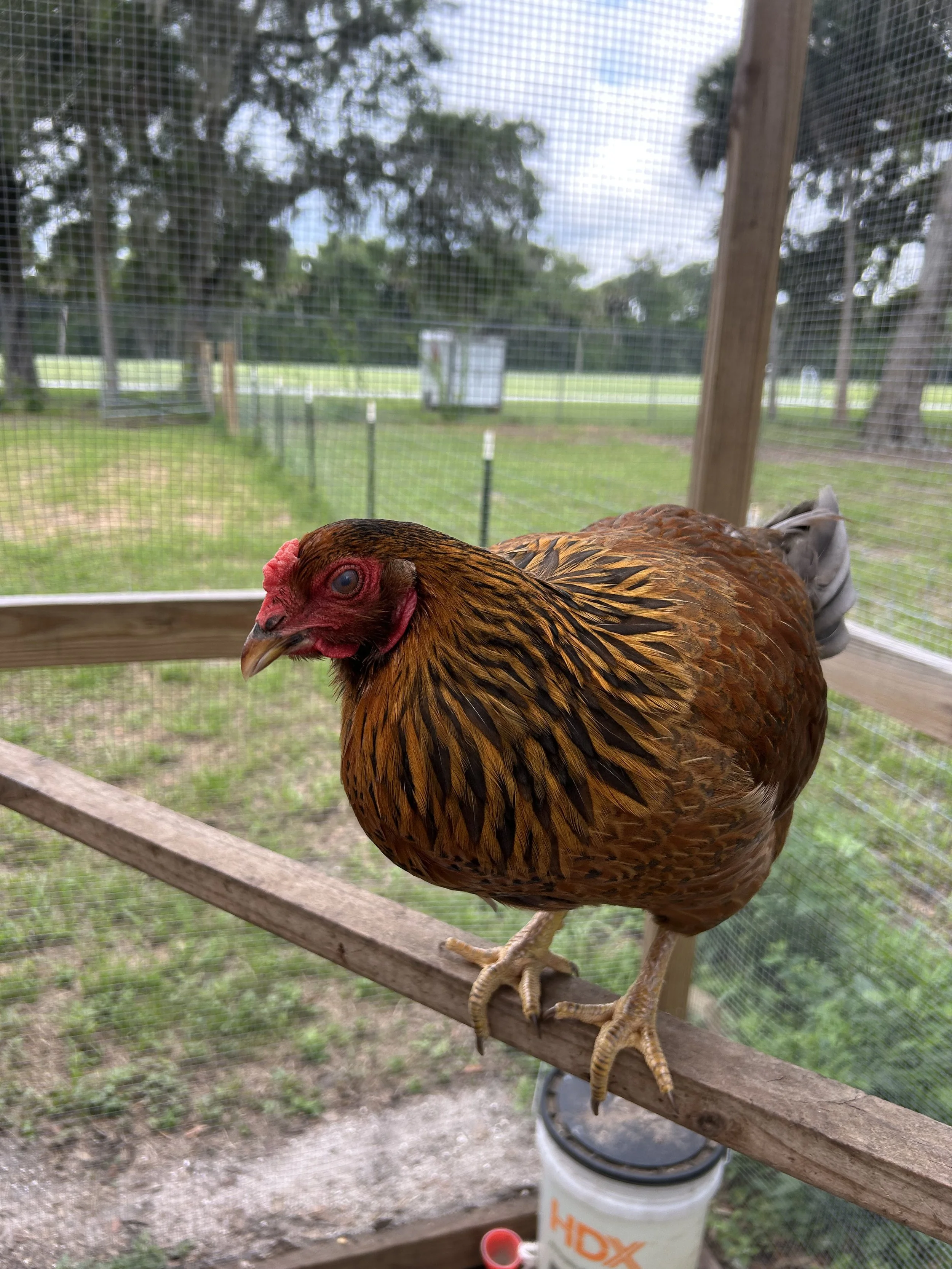
We have friends who also keep chickens. After posting an update, a friend commented asking us to check the wings. We looked it up. Hen feathers grow faster. If there are two rows of feathers on their wings, it is likely a hen. If the feathers are all the same length, the bird is likely a rooster. We even used AI to examine the photos and suggest the genders. It looks confirmed. Hei Hei is the rooster and the other two are hens. Yes, Kevin is a girl. Disney fans rejoice.
DIY Stratch Grain and Layer Feed
Since we got chickens for the eggs, I wanted to make sure that what they are eating is healthy for us, too. All of the ingredients listed below are Non-GMO and preservative free. This mix promises to produce healthy birds laying eggs with dark, rich, and nutrient-dense yolks.
In a 5 gallon bucket, combine…
1.5 lbs soft red wheat berries
1 lb split peas
3/4 lb black oil sunflower seeds
3/4 lb cracked corn
1/2 lb hulled oat groats
1/4 lb flax seeds
1/4 lb dried mealworms
3 Tbs marigold petals
1 Tbs salmon oil
For me, this came to $23.47 per 5 pounds of feed. Most of the bags hyperlinked above are enough for 5 - 10 rounds of feed. I added each to my cart and doubled the groats and flax seeds. For $200 (this include the mylar bags for storage), I had enough to make five 5-pound bags of feed (25 total pounds). The mylar bags come with oxygen absorbers, so the feed is good for long-term storage.
In addition to the 25 pounds of feed, I was also left with 1.5 pounds of wheat berries, 3/4 pound of sunflower seeds, 3.75 pounds of cracked corn, 1/2 pound of groats, 3/4 lbs of flax seeds and 59 more rounds of salmon oil.
I did not include marigold petals in my calculations because I grow these in my garden and regularly collect the seeds. Instead of putting the petals in my compost, I’ll dry and save them for the feed.
I also found the cracked corn ($0.20 per 5 lbs) and sunflower seeds ($1.17 per 5 lbs) at Tractor Supply instead. This brought down my 5-lb feed cost to $21.54 + $1.87 for the mylar bag. I am hoping I can order more oxygen absorbers and reuse the bags. Also, my first 5-pound ration will be stored in an airtight container (no bag).
Nesting Herbs
In addition to the homemade scratch grains, I am now harvesting and drying our own nesting herbs. Here is what I’m collecting and the benefits of each:
Chamomile - calming, lice and mite deterrant
Lavender - calming, natural insecticide
Marigolds - Laying stimulant, adds color
Oregano - antibacterial properties
Rosemary - Respiratory health, natural deodorizer, insect repellant
Rose petals - aromatic, high in Vitamin C